



Masticating vs Centrifugal Juicer: Which Is Worth Your Money?
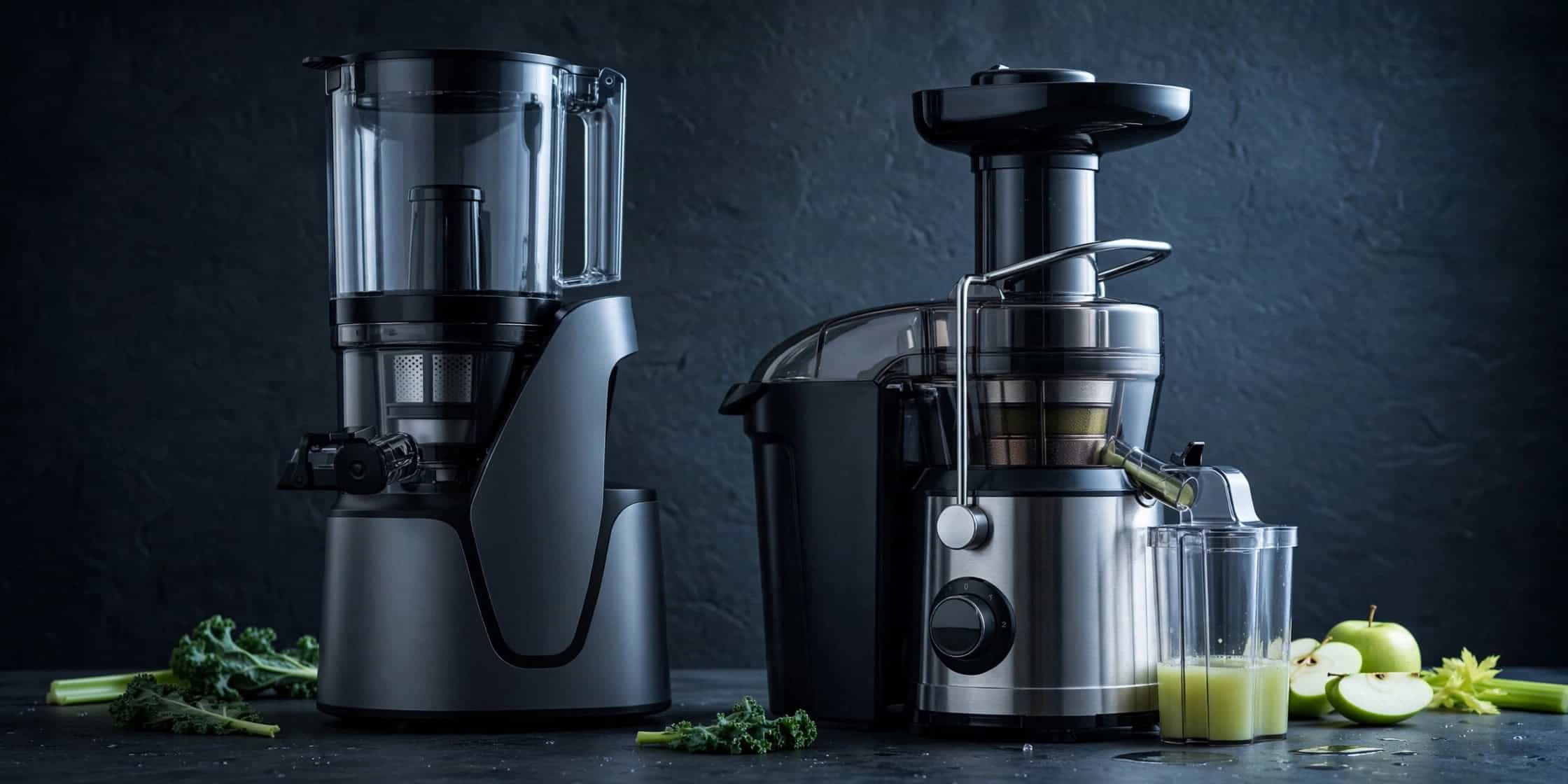
Walk into the juicer aisle (or fall down the Amazon rabbit hole) and you’ll hit the same fork in the road every buyer hits: masticating or centrifugal? One side costs $400–700 and takes its time; the other costs $60–200 and fills a glass in a minute. Both make juice. Only one of them is right for your routine — and the honest answer depends on how often you juice, what you juice, and how much you care about what happens to the juice after it leaves the machine.
This guide breaks down the real differences — yield, nutrition, shelf life, noise, cleanup, cost — without the marketing fog, and tells you exactly who should buy which.
How they actually work
Masticating juicers (slow juicers, cold-press juicers) crush produce with a single rotating auger turning at 40–80 RPM. The auger squeezes fruits and vegetables against a strainer, pressing the juice out slowly. Minimal heat, minimal air whipped in.
Centrifugal juicers shred produce with a flat blade spinning at 6,000–14,000 RPM, then fling the pulp against a mesh basket — the “centrifuge” — to separate juice. Fast, loud, and violent at the microscopic level: all that speed introduces heat and air.
That mechanical difference drives every practical difference below.
Head-to-head: the seven things that matter
| Masticating | Centrifugal | |
|---|---|---|
| Juice yield | 15–30% more juice per pound of produce; pulp comes out dry | Wetter pulp = juice left behind |
| Nutrition / oxidation | Less heat and air; better nutrient retention | Heat + aeration oxidize juice faster |
| Juice shelf life | 48–72 hours refrigerated in airtight glass | A few hours before noticeable degradation |
| Noise | Quiet — apartment-friendly hum | Loud — a 10,000 RPM motor screams |
| Speed | Slow: several minutes per recipe | Fast: a glass in about a minute |
| Price | $130–700 | $60–200 |
| Greens & celery | Excellent — the whole point | Mediocre — leafy greens defeat most centrifugals |
Juice yield: the hidden price tag
This is the comparison most buyers miss. A masticating juicer extracts roughly 15–30% more juice from the same bag of produce, with the biggest gap on leafy greens, herbs, and celery — exactly the ingredients health-focused juicers buy most. Over a year of daily juicing, that yield difference translates into real produce savings. A $500 slow juicer that saves you $2–3 a week in vegetables pays back its premium over a $100 centrifugal in about two to three years — and keeps paying after that.
If you juice mostly oranges and apples, the yield gap narrows. If you juice kale, spinach, wheatgrass, and celery, it’s enormous.
Nutrition and oxidation: what’s actually proven
Cold pressing reduces heat and oxidation during extraction, which preserves more enzymes and heat-sensitive nutrients than high-speed juicing. That’s well-established. What’s not established is that the difference transforms your health — juice is still juice. The honest framing: masticating gives you measurably better nutrient retention and juice that tastes fresher longer, not a medical treatment.
Centrifugal juice isn’t “dead” or worthless — it’s just more aerated and oxidizes faster. Drink it immediately and the gap shrinks considerably.
Shelf life: the batch-juicing question
Cold-press juice keeps 48–72 hours refrigerated in a glass bottle filled to the brim. That window is what makes batch juicing viable: juice Sunday, drink through Tuesday. Centrifugal juice degrades within hours — foam, separation, flavor loss. If your routine is “juice once, drink all week,” masticating isn’t just better, it’s the only option that works. If you juice fresh every morning and drink it on the spot, shelf life barely matters.
Noise, speed, and the morning routine
A centrifugal juicer at 6 AM in an apartment building is a social decision. Masticating juicers hum; centrifugals scream. On speed, the tables turn: centrifugal fills a glass in a minute, while a slow juicer takes several minutes per recipe (though self-feeding hopper models like the Nama J2 let you walk away while they work). Decide which constraint binds you — thin walls or thin schedule.
Cleanup: the habit killer
Ask juicer owners why they quit and the answer is almost never the motor — it’s the 15-minute cleanup. Both types need rinsing right after use (dried pulp is the enemy), but centrifugal mesh baskets with hundreds of tiny holes are notoriously annoying to scrub, while masticating parts are fewer and simpler — and strainer-free designs like the Hurom H70 rinse in under a minute. Whatever type you buy: rinse immediately, every time. That’s the whole secret.
Disadvantages of a Centrifugal Juicer
For balance, here’s the full list of what centrifugal juicers give up:
- Poor leafy-green extraction. High-speed blades fling greens against the basket before extracting much — you get foamy green water and wet pulp.
- Fast oxidation. Heat and aeration degrade the juice within hours — foam, separation, dull flavor the same day.
- Lower yield. Wetter pulp means more juice left behind — 15–30% less per pound of produce than a slow juicer, widest on greens and celery.
- Noise. A 10,000 RPM motor is loud — a real consideration for apartments and early mornings.
- Worst-in-class cleanup. Mesh baskets with hundreds of tiny holes are the most annoying scrub in juicing.
None of these matter much if you juice occasionally with apples and carrots and drink it immediately. All of them matter if greens are your staple or you want to batch-prep.
Who should buy a masticating juicer
- You juice daily or near-daily — the yield and quality advantages compound.
- Green juice, celery juice, and wheatgrass are your staples.
- You want to batch-juice for the week.
- Noise matters (apartments, sleeping kids, early mornings).
- You’re willing to spend $130+ for a machine you’ll keep for years.
See our ranked picks: Best Masticating Juicers (2026): Compared & Ranked — from the ~$550 Nama J2 down to the ~$130 Shine SJX-1.
Who should buy a centrifugal juicer
- You juice occasionally — a few times a month, not a daily ritual.
- Speed is the priority: you want juice in 60 seconds before work.
- Your produce is mostly hard fruits and roots (apples, carrots, oranges), not leafy greens.
- Budget is the binding constraint and $100 is the ceiling.
- You’ll drink it immediately, every time.
No shame in it — an $80 centrifugal juicer you actually use beats a $600 slow juicer gathering dust. The machine that gets used is the right machine.
Which Juicer Is Best for Beginners?
If you’re not sure the juicing habit will stick, don’t start with a $550 flagship — start cheap and upgrade when the habit is proven:
- Cheapest credible start: a budget slow juicer like the Shine SJX-1 (~$130) or the SiFENE (~$90) — real cold-press juice while you decide.
- If speed matters most: an affordable centrifugal is fine — just drink it fresh, since it won’t keep.
- If you already juice daily and know the habit sticks, skip the budget tier — buy the machine you’ll keep for a decade.
The beginner mistake isn’t buying the wrong type — it’s buying an expensive machine before the habit exists.
What about blenders?
The third option deserves a mention: a high-speed blender doesn’t juice at all — it keeps everything, fiber included. Juice delivers concentrated micronutrients fast with minimal fullness; smoothies keep you full for hours. If your goal is a light morning green drink with maximum vegetable volume per glass, juice. If it’s a meal replacement, blend. Many serious juicers eventually own both.
Frequently asked questions
Can a centrifugal juicer handle leafy greens? Poorly. High-speed blades fling leafy greens against the basket before extracting much — you get foamy green water and wet pulp. If greens are your main ingredient, this alone settles the debate.
Is masticating always healthier? It retains more nutrients and oxidizes slower — a real, measurable edge. But the health difference between fresh centrifugal juice drunk immediately and cold-press juice is small. The big health variable is whether you juice at all, and with real vegetables.
How long does each type’s juice last? Cold-press: 48–72 hours refrigerated in airtight glass. Centrifugal: drink within a few hours; it degrades visibly (foam, separation, dull flavor) the same day.
Which is easier to clean? Masticating, on average — fewer parts, simpler shapes, and strainer-free options. Centrifugal mesh baskets are the worst cleanup in juicing. But both punish you equally if you let pulp dry.
Can I put whole fruits in either? Wide-chute masticating models (75mm+ chutes, hopper-fed machines) take whole apples with minimal prep. Centrifugals usually have wide chutes too — but always remove hard pits and thick citrus rinds regardless of type.
What is the 80/20 rule for juicing? It means building each juice from roughly 80% vegetables and 20% fruit. The rule exists to keep sugar in check: fruit brings flavor and sweetness, but several pieces of fruit juiced together can land 50–75 grams of sugar in one glass. In practice, that’s about ½ to 1 cup of fruit per drink, with cucumber, celery, leafy greens, and lemon as the low-sugar base. The idea is credited to juicing coaches and manufacturer guides (Hurom’s beginner FAQ and Nama’s juicing series both teach it); a Northwestern Medicine dietitian gives the same ratio advice, noting that we absorb more sugar drinking produce than eating it whole. Beginners who find green juices unpalatable often start heavier on fruit and dial back as their taste adjusts — which is fine; the rule is a guideline, not a law.
The verdict
Buy the juicer that matches your routine, not the one with the best specs. Daily green-juice drinker who batch-preps and hates noise? Masticating — see our 2026 ranked picks. Occasional juicer who wants speed and simplicity on a budget? Centrifugal, drunk fresh, no guilt. Either way, rinse it the same day — that’s the habit that actually determines whether the machine earns its counter space.


