



Carrot Juice Benefits, Nutrition & How to Make It
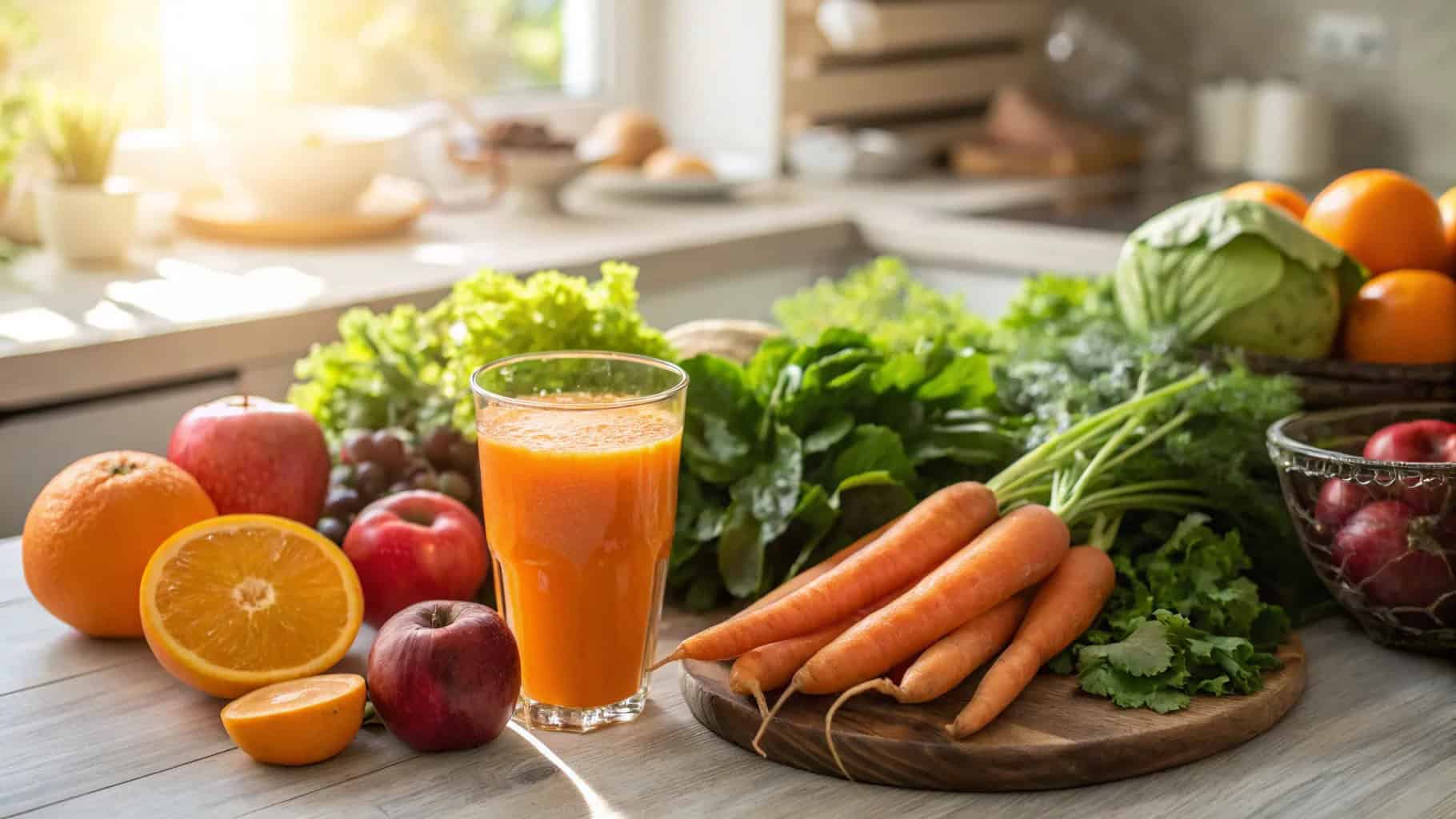
Carrot juice is the liquid extracted from fresh carrots, with most of the pulp left behind. It is naturally sweet, bright orange, and concentrated — which is both its appeal and its trade-off. A glass provides a large amount of beta-carotene and vitamin A activity in a small serving, but it contains less fiber than eating the vegetable whole.
This guide covers what is actually in carrot juice, what vitamin A does and does not do for your eyes and skin, how juicing compares with eating whole carrots, and how to make it at home with a juicer or a blender. It does not promise a detox or a cure. Its benefits come from its nutrients, not from cleansing your liver or flushing toxins — claims for which there is no reliable evidence.
Carrot Juice Nutrition Snapshot
Values vary by brand, recipe, and whether juice is canned, bottled, or freshly made. The figures below use USDA FoodData Central data for canned carrot juice as a consistent reference, so treat them as a qualified guide rather than an exact label for your glass.
Per 1 cup (about 236 grams) of canned carrot juice
- Calories: about 94 kcal
- Carbohydrate: about 21.9 grams
- Total sugars: about 9.2 grams
- Fiber: about 1.9 grams
- Protein: about 2.2 grams
- Vitamin A: about 2,256 micrograms RAE, roughly 251% of the Daily Value
- Beta-carotene: about 22 milligrams
- Vitamin C: about 20.1 milligrams, roughly 22% of the Daily Value
- Vitamin K: about 36.6 micrograms, roughly 31% of the Daily Value
- Vitamin B6: about 0.51 milligrams, roughly 30% of the Daily Value
- Potassium: about 689 milligrams
Beta-carotene is the pigment that gives carrots their orange color. Your body converts some of it into vitamin A, a fat-soluble vitamin involved in vision, immune function, and the normal maintenance of skin and other tissues. Carrots also provide alpha-carotene, another carotenoid that can be converted to vitamin A, in smaller amounts.
For comparison, USDA data for raw carrots lists about 41 calories, 2.8 grams of fiber, 4.7 grams of sugars, and 835 micrograms RAE of vitamin A per 100 grams. A cup of juice packs the vitamin A activity of a large amount of carrots into one drink — but not all of the original fiber comes with it.
Eye Health: What Vitamin A Can and Cannot Do
Vitamin A has a real, well-established role in vision. It is used to form rhodopsin, a pigment in the retina that helps your eyes work in low light, and it helps maintain the surface of the eye.
When vitamin A intake is severely inadequate, an early sign can be night blindness — difficulty seeing or adapting in dim light. Prolonged, severe deficiency can damage the cornea, a condition called xerophthalmia, and can lead to blindness. Correcting a deficiency can help restore night vision lost because of that deficiency.
That is different from improving vision that is already normal. Carrot juice will not sharpen healthy eyesight, change your prescription, or reverse refractive errors such as short-sightedness. A fair summary is: getting enough vitamin A helps protect the vision you have and prevents deficiency-related problems, and carrot juice is one concentrated dietary source of it.
Skin and Antioxidants: A Measured View
Beta-carotene and vitamin C are often described as antioxidants — they can help neutralize free radicals, unstable molecules produced during normal metabolism and by exposures such as sunlight and pollution. Vitamin A also supports the normal formation and maintenance of skin tissue.
Those functions are a reasonable basis for including carotenoid-rich vegetables in a diet that supports overall skin health. They are not a basis for promising clearer skin, fewer wrinkles, or a glow within a set number of days. Skin is affected by sleep, sun exposure, overall diet, and genetics, and no single juice has been shown to transform it on its own. Think of any benefit as long-term nutritional support, not a treatment in a glass.
If you rotate vegetable juices as part of a broader routine, our 7-day green juice plan shows how juices can sit alongside whole meals rather than replacing food for long periods.
Juicing vs. Eating Whole Carrots: The Fiber Trade-Off
Whole raw carrots provide about 2.8 grams of fiber per 100 grams. Juicing separates most of the pulp, so carrot juice provides only about 1.9 grams of fiber in an entire cup. You lose much of the fiber that adds bulk, supports regular bowel movements, and slows digestion.
That slower digestion changes how sugar is handled. The natural sugars in a whole carrot are eaten with fiber and take time to chew and digest. In juice, the equivalent of several carrots can be drunk quickly, in liquid form, with less fiber to slow it down. Juice is not the same as a sugar-sweetened soda — it brings vitamin A, potassium, and other nutrients with it — but portion and frequency matter more than with whole carrots.
Juicing does not destroy most of the beta-carotene; that is why the juice stays orange and vitamin A values stay high. The blender method below keeps more pulp if you do not strain it, so a thicker drink retains more fiber. For everyday eating, whole carrots are the better default for fiber and fullness, while juice is an occasional, concentrated way to add variety.
How to Make Carrot Juice at Home
You will need about 450 grams (roughly 1 pound) of carrots for approximately 1 cup of juice, though yield varies with carrot size, freshness, and your machine. Choose firm carrots, scrub them well, trim the ends, and cut away damaged spots. Peeling is optional if they are well washed.
With a juicer
- Wash, trim, and cut the carrots into pieces that fit your juicer’s chute.
- Feed the pieces through, following the manufacturer’s instructions.
- Stir, pour over ice if you like, and drink soon after making it for the best flavor.
- Refrigerate leftovers promptly in a sealed container and use within a day or two. Separation is normal — shake before drinking.
With a blender (no juicer needed)
- Chop about 450 grams of carrots into small pieces.
- Blend on high with about 120–180 ml (1/2 to 3/4 cup) of cold water until as smooth as possible.
- For smooth juice, pour through a fine-mesh strainer, cheesecloth, or nut-milk bag and press to extract the liquid.
- For more fiber, skip straining or strain lightly. The result will be thicker, closer to a smoothie.
On days when you want a lighter, lower-sugar drink, infused water is another option — see our guide on how to make detox water for basic methods and storage tips.
Flavor Pairings That Work
Carrot juice is sweet and earthy on its own. Small additions can balance it without added sugar:
- Ginger: a small piece of fresh ginger adds warmth and a spicy edge that cuts the sweetness.
- Orange: freshly squeezed orange juice adds citrus acidity.
- Apple: a crisp apple adds familiar fruit sweetness and helps the juice blend smoothly.
- Turmeric: a pinch of ground turmeric, or a small piece of fresh turmeric, adds an earthy note and deepens the color. Start small — its flavor is strong.
- Lemon: a squeeze brightens the flavor and balances sweetness.
Add pairings for taste first. A tasty combination does not need a health claim to be worth making.
Cautions to Know
Carotenemia from excess
Consuming very large amounts of beta-carotene-rich foods over weeks can cause carotenemia — a yellow-orange tint to the skin, most noticeable on the palms and soles. Unlike jaundice, it does not yellow the whites of the eyes. Carotenemia from food is generally described as harmless and reversible: the tint usually fades over several weeks to months after intake is reduced. You do not need to avoid carrots altogether, but cutting back and varying your vegetables is the usual step. If discoloration persists, check with a healthcare professional to rule out other causes.
Sugar and blood sugar
Carrot juice contains natural sugars and about 21.9 grams of carbohydrate per cup in the USDA canned reference, with relatively little fiber. People managing diabetes or watching their blood sugar should treat it as a carbohydrate-containing drink, consider portion size, and discuss how it fits their individual plan with their clinician or dietitian. This article is general information, not medical advice for your situation.
Detox claims
Wash produce carefully, refrigerate fresh juice promptly, and do not rely on juice to replace meals or prescribed treatment. If you have seen claims that a drink removes toxins, read our explainer on whether detox water works — the same evidence questions apply to detox juice claims. Your liver and kidneys already carry out the body’s main waste-removal work.
Frequently Asked Questions
Is carrot juice as healthy as eating whole carrots?
Not exactly. Juice retains much of the beta-carotene, vitamin A activity, and potassium, but loses most of the fiber and is easier to consume in larger amounts. Whole carrots are the better everyday choice; juice can be an occasional addition.
How much carrot juice should I drink?
There is no single required amount. Half to one cup provides substantial vitamin A activity — one cup of the USDA canned reference provides about 251% of the Daily Value. Because more is not automatically better, vary your vegetables across the week rather than drinking large amounts daily.
Can carrot juice improve my eyesight?
It can help prevent problems linked to vitamin A deficiency, including night blindness caused by that deficiency. It will not improve normal vision, fix refractive error, or replace glasses or eye care.
Why did my skin turn slightly orange?
Very high intake of beta-carotene-rich foods over time can cause carotenemia, a reversible yellow-orange tint, especially on the palms and soles. Reducing intake usually allows the color to fade over weeks to months. If you are unsure of the cause, seek medical advice.
Bottom line: Carrot juice is a concentrated, tasty source of beta-carotene and vitamin A, with modest amounts of vitamin C, vitamin K, and potassium. Enjoy it for what it is, keep the fiber trade-off in mind, and let whole carrots do the everyday work.


